
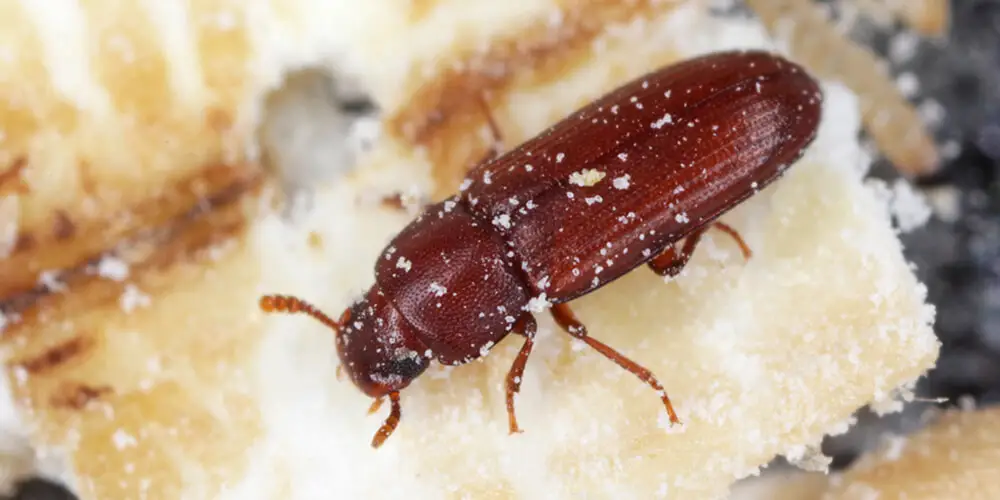
Nothing is quite as alarming as going into your pantry and seeing little bugs crawling in and around your food items.
One of the more common pantry pests are flour beetles. You can find these insects in pet food, bird seed, cake/muffin/biscuit mixes, spices, flour, cornmeal, crackers, nuts and seeds, cereals, etc.
How do bugs get into sealed flour?
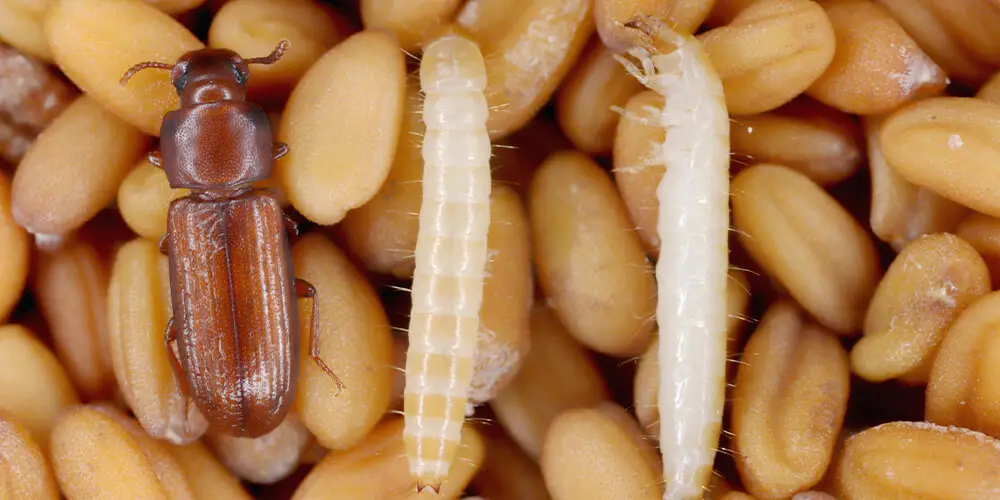
These tiny pests are brown and 1/7-1/8” (3-4 mm) in length. They sometimes come in with purchased grain-based foods. They are unable to feed on whole grains, but instead they feed on the dust or broken bits. Any of this type of food that comes in soft paper or cardboard packages is a target for these pests.
Can you still use flour if it has bugs in it?
Adult flour beetles can live for over a year. The females lay eggs loosely in the dusty food they feed on, and usually lay a couple of eggs a day. Eggs hatch within 1-2 weeks, and off-white larvae emerge.
This stage lasts for 6 weeks, and adults eventually appear. The flour beetle has strong chewing mouth parts that allow it to work its way into soft packages. Usually, grain-based food items that stay in your pantry for extended periods of time are the most susceptible.
At every stage of development, flour beetles contaminate your food with their bodies and their by-products. Essentially, they are nuisance pests that need to be eliminated immediately, once detected.
What is the best way to get rid of flour beetles?
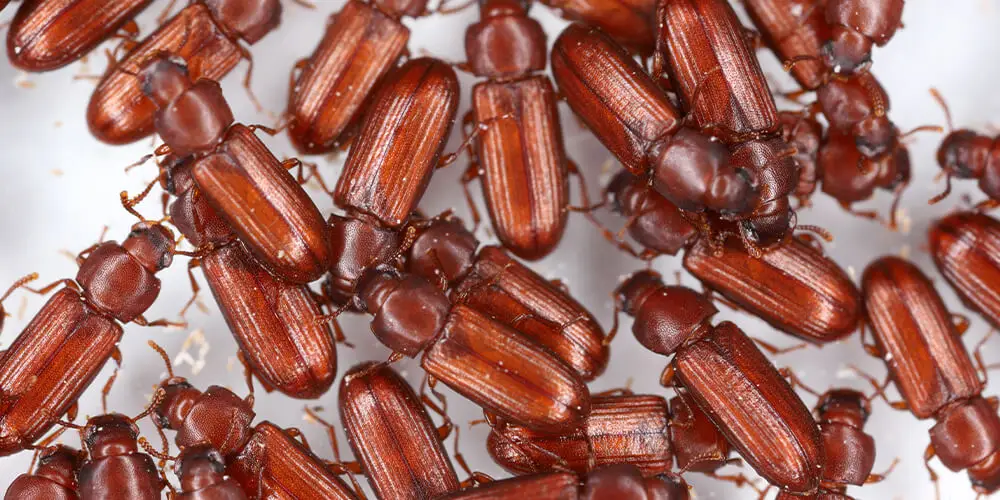
The first thing you need to do to break the cycle is to empty all the affected shelves.
Inspect each item as you proceed and throw out any soft package that is suspect immediately. If you aren’t sure, throw it out anyway. Best to lose this food than to chance continuing the cycle. Discarded items need to be placed in zip-lock bags, until trash day.
Next, you need to vacuum the shelf of any beetles that you can see and any spilled food, especially along cracks and crevices. Toss the vacuum bag out and seal it in a plastic bag to prevent any live bugs from escaping.
What is the best killer for flour beetles?
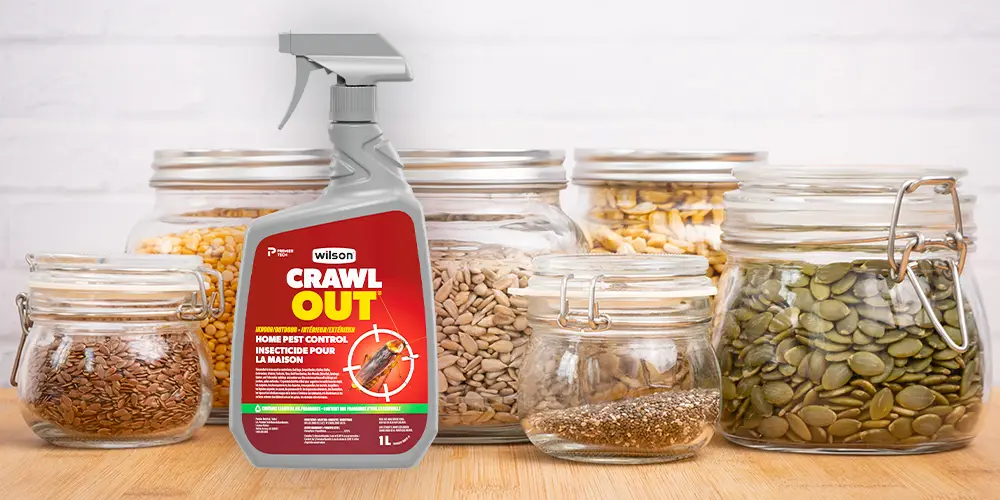
To complete the breaking of the life cycle, you need to apply Wilson CRAWL OUT Crawling Insect Killer along the cracks and crevices. Follow instructions on label.
Once the shelves are dry, wipe down the surfaces and re-introduce the saved food items.
How to store flour so no bugs?
It is strongly recommended to place paper packages in sealed containers, such as zip-lock bags. Slow-moving, long-term food items should be placed in plastic bins or glass jars, both with a sealed lid. The most common infested pantry items and possibly carriers of eggs or beetles are bird seed and pet food. Store these packages in tightly sealed metal or plastic containers. And clean them out before refilling.
Most pantry pest problems can be prevented by using all soft-packaged dried foods within 2-4 months of purchase and storing them in sealed zip-lock bags or sealed plastic/glass containers.
