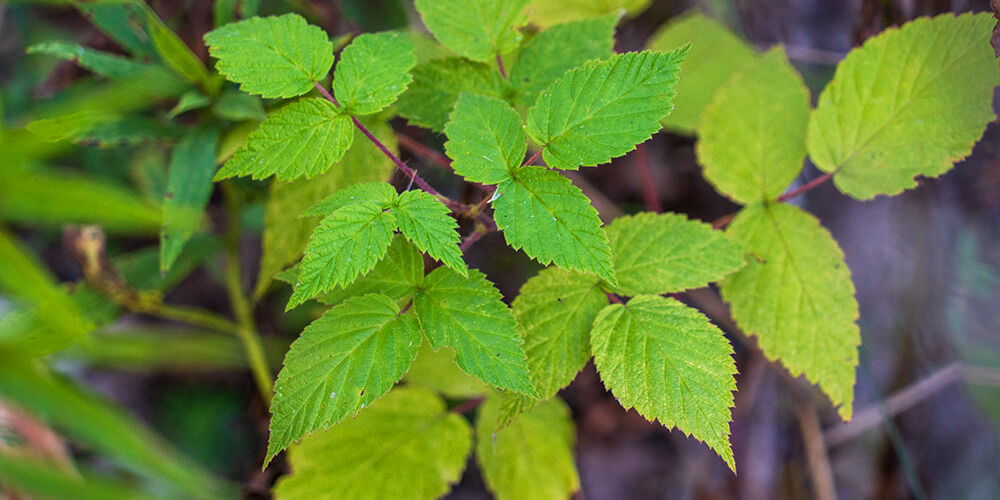

“Leaves of three, let it be”. So goes the old saying. You’ll understand why it is so important to identify poison ivy and stay away from it, as humans are the only species known to develop a rash from it.
How can I tell if this is poison ivy?
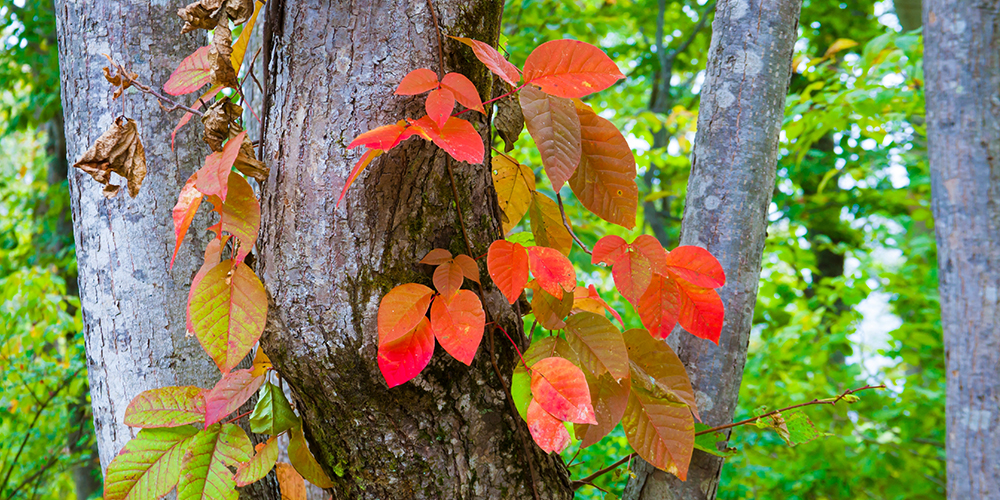
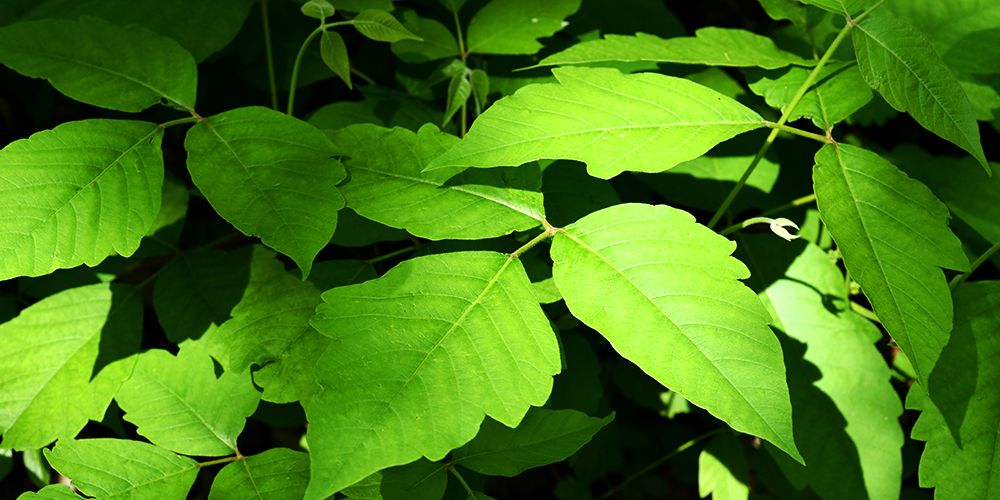
The leaves of poison ivy have three-pointed shiny leaflets. Early in the spring, they are reddish, but turn to green in the summer and, later in the season, change to shades of yellow, orange or red. They are toxic at every stage. In fact, every part of the plant is: roots, stems, leaves and berries. Even the dead vegetation that you see in late fall and winter is toxic. This is a nasty plant!
Does poison ivy grow everywhere in Canada?
Poison ivy can be found in every Canadian province except Newfoundland and Labrador. It grows out in the open, in woods, in sandy or swampy areas, along borders of woods, fencerows and roadsides. Although traditionally poison ivy was always spotted along wooded trails and campsites, it can now even be found growing in backyards and flower gardens.
The plant has an extensive underground root system that expands further, especially in disturbed areas. Birds also eat the berries and disperse the seeds through their digestive system. Usually, poison ivy is seen as a dense ground cover, but in parts of Canada, it can also grow as a shrub or as a vine.
What happens if I touch poison ivy?
Poison ivy releases an oil called urushiol. This oil can cause an unpleasant rash on the skin. Even if you come into contact with poison ivy inadvertently, within 12-48 hours, you may notice yourself scratching a rash. It’s important to note that urushiol does not evaporate. It remains on the surface of objects for years unless it’s washed off. That explains why you may get a rash if you pick up a gardening tool that has been in contact with poison ivy in the past.
Similarly, urushiol is frequently transmitted by domestic animals, which are not susceptible to it. If your dog comes into contact with poison ivy, simply petting it can transfer urushiol to your skin. The same is true if you walk in an area where the plant is present. Even tying your shoes and then touching your skin can cause a severe reaction.
As soon as it comes into contact with the skin, urushiol penetrates it. Within a few hours, it becomes completely bound to the skin. It is imperative to wash immediately. Wear rubber or nitrile gloves to wash your skin, clothing, tools and pets.
Can you prevent a rash from poison ivy?
Luckily, if it’s been less than a few hours, urushiol can be removed with soap and cold water. Always use cold water because hot water tends to open skin pores and increase the chance of the oil being absorbed into your skin. Use a washcloth to scrub your hands. Remember to also scrub under your nails with a brush. If it’s been longer than a few hours — it may be too late as washing with soap and water is very unlikely to help.
Urushiol may stay on your clothes for up to ten years! You can store them in a drawer and then take them out years later, the residual urushiol can still cause a blistering rash. It's crucial for outdoor enthusiasts to always remember to wash the gear after camping or backpacking.
Manipulate everything with gloves. Wash your clothes separately, using hot water and good detergent (put them through a second cycle just to be sure) and dry them outside or on a drying rack to avoid contaminating your dryer. Shoes can also be hand-washed with gloves, a stiff brush, lots of soapy water and rinsed well. You can clean gear and equipment with soapy water or with any degreasing cleaners. Remember that urushiol is an oil and you need a degreasing soap to eliminate it.
How long does it take to get poison ivy out of your system?
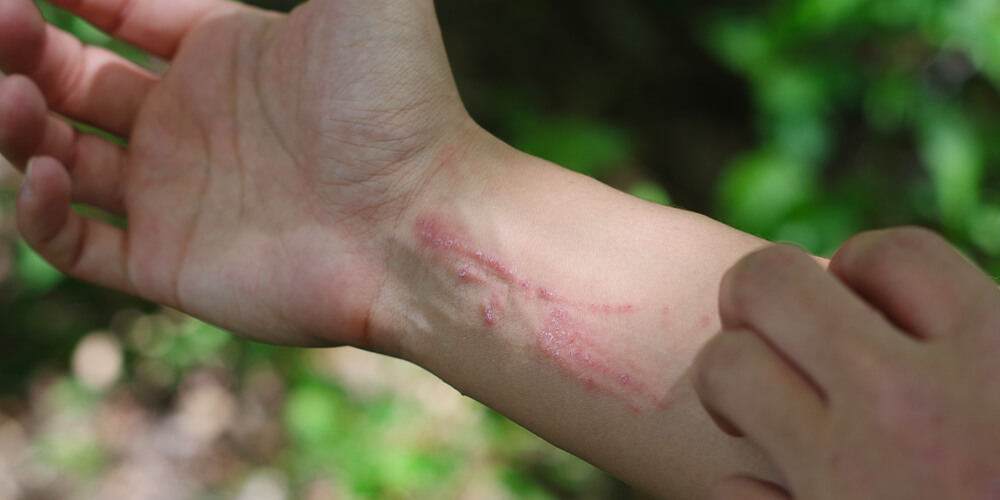
Because of the way the plant touches your skin, poison ivy rash usually develops in a straight line. However, the rash may be more widespread if you come into contact with an item of clothing or pet fur that has urushiol on it. In addition, you might inadvertently use your fingertips to spread the oil to other areas of your body.
Symptoms usually appear within 24-48 hours, and last 1-3 weeks. The reaction begins with very intensely itchy skin followed by redness and inflammation. In some cases, fluid-filled blisters may form. Severity depends on the amount of urushiol that you come into contact with, and on individual allergic resistance.
What helps poison ivy rash go away?
Control itching in order to prevent your skin from becoming infected from scratching. After a thorough wash, applying cool, moist compresses to your skin regularly throughout the day will help reduce itching as soon as it starts. Itchy skin can be relieved by taking short lukewarm baths and adding half a cup of baking soda or colloidal oatmeal to the water. Cool showers are also effective if you would rather not take a bath. There are over-the-counter remedies such as calamine lotion or hydrocortisone cream available.
How dangerous is poison ivy to humans?
If the rash covers more than 30% of your body, affects your hands, or is on your face or genitals, you should consult a doctor or nurse practitioner. Also, if you begin to exhibit symptoms of infection, such as worsening redness or swelling, skin that becomes hot or sensitive to the touch, discharge from the rash or pus-filled blisters, or a fever, you should seek medical attention immediately.
Note: The rash isn’t contagious from place to place on your body. If the rash is on your hands, it can’t spread to other body parts through touch unless you haven’t washed your hands after exposure and the oil remains on your skin.
What kills poison ivy plants permanently?
There are three ways to remove poison ivy plants: hand digging, spraying a specific herbicide, or smothering them. This plant has an extensive underground system of rhizomes (horizontal plant stems) growing just below the surface, which complicates removal.
Remove poison ivy by hand
This involves suiting up first with gloves, long sleeves, long pants, boots and safety glasses; these will have to be thoroughly cleaned afterwards. Some people use disposable hazmat coveralls that they can throw away after. Others wear rain suits, boots and rubber gloves that can be washed and degreased after use. The key, obviously, is protecting your skin from any exposure, remembering that all parts of the poison ivy plant contain urushiol.
Wait until the ground is damp to make removing roots easier. Use a small hand shovel or garden fork to gently dig around the plant and pull out as much of the root system and underground stems as possible to prevent resprouting.
You will need to reduce the ability of the plant to regrow by regularly working up the soil afterwards. It may take several seasons to totally remove serious infestations, but cutting or trimming the young shoots as soon as they appear will eventually starve and destroy them.
Get rid of poison ivy using herbicide
In some Canadian provinces, cosmetic pesticide bans restrict broad-spectrum chemical use, but exemptions are frequently made for noxious or poisonous plants like poison ivy. Check your specific municipal and provincial regulations before applying.
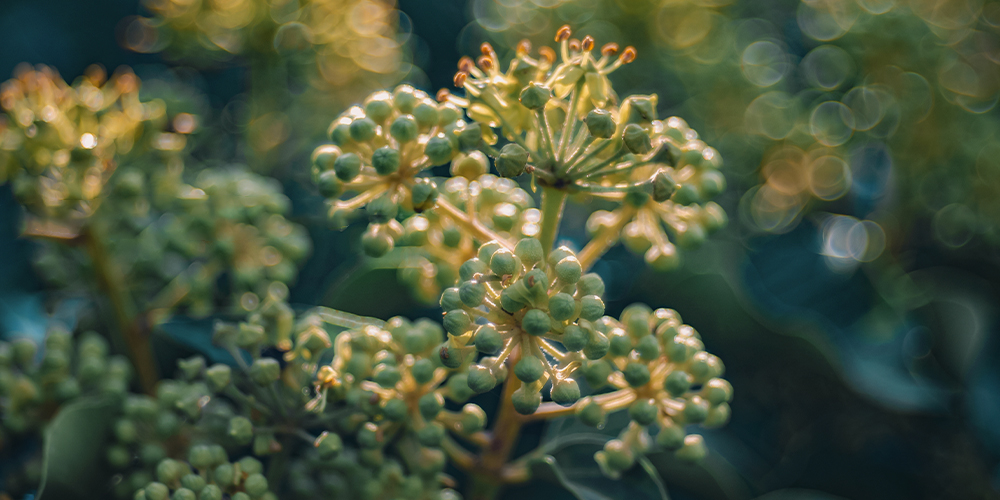
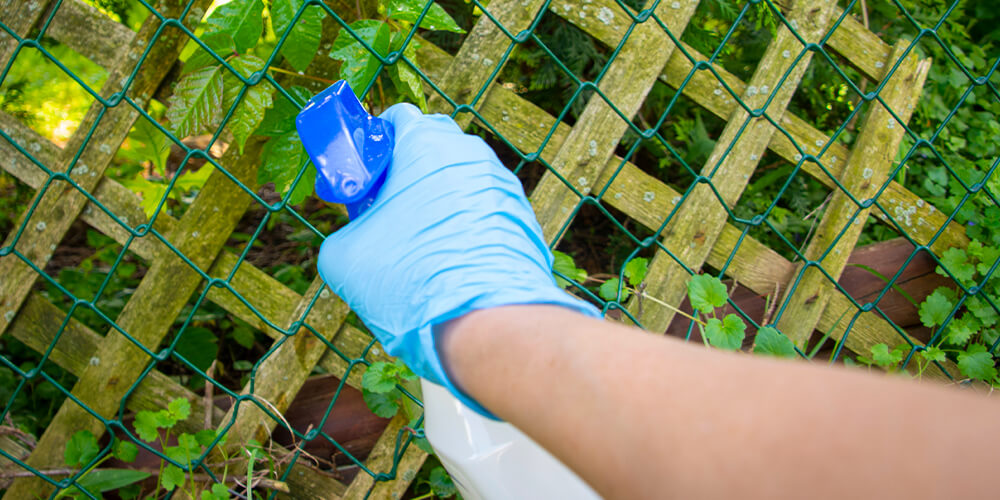
Herbicides registered in Canada for controlling poison ivy primarily rely on active ingredients like glyphosate, triclopyr or a combination of 2,4-D, mecoprop and dicamba. These systemic treatments travel down to the roots to kill the entire plant. Best timing for spray is when the leaves are well exposed and growing actively during June and July.
Be aware that many of these herbicides will kill or damage other plants growing nearby. So, you need to be careful not to spray on a windy day to keep mist from drifting onto desirable plants. Consider covering plants that you don’t want to damage before you spray.
Smothering poison ivy
This is a chemical-free way to deter the plant by cutting off its access to sunlight and air. Note that this may take 2 months or even all season to smother the plants out completely.
Wearing your protective gear, cut the stems close to the ground with sharp pruning shears. Don’t rip them out by hand. If you can, pour boiling water over the area to help kill the roots, then cover the area and a little beyond with heavy-duty black plastic, heavy tarp or even several layers of cardboard. Secure the edges.
How to safely dispose of poison ivy?
Remember that when the plant is dead and brown, the oils remain active and can still cause a rash.
- Never burn it: In addition to urushiol having a shelf life of more than ten years, it is incredibly heat resilient. Because fire only releases the toxins into the air rather than breaking it down, it is crucial to NEVER, EVER burn poison ivy. When the substance is inhaled or aerosolized, symptoms change from a terrible rash to a hospital stay.
- Trash, don't compost: Urushiol does not easily break down. Putting it in a compost pile will contaminate the soil, making it a hazard for future use. Place all debris in heavy-duty, double-bagged garbage bags and dispose of them with household trash. Tag the bags as containing poison ivy.
- Bury it: All dead stems, leaves and roots can be buried at least 30 cm (12”) deep or more in an out-of-the-way spot. The idea is to ensure that people and pets don’t get at it later.
Clean your shears and shovels with degreasing agents, rubbing alcohol or mineral spirit afterwards to remove any lingering oil.