

Ok, so you’ve found a few spiders in your house or garden. Spotting a few spiders is not necessarily bad, and that’s because they prey only on insects that are wandering inside your house or rummaging around your outdoor plants.
In Canada, there are over 1,000 different species of spiders. It can be said that most spiders are harmless to humans, but there are two spider species that are listed here as potentially dangerous.
The nine spider species that you are most likely to come across in Canadian homes and gardens are listed here. Also included is a tenth species that is not native nor established in Canada. It is only a hitchhiker from the south, but it needs mentioning because its venom is quite harmful.
What is the most common house spider?
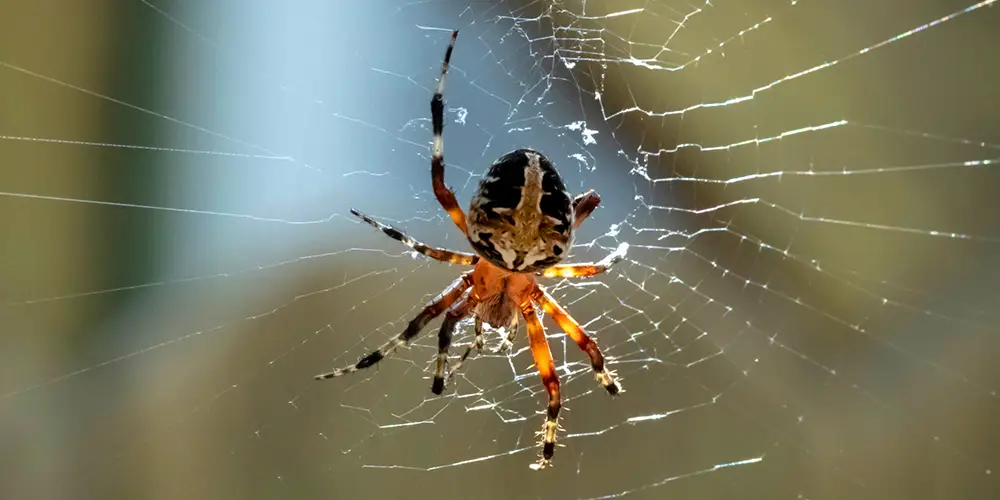
House spider
The common house spider is a small, yellowish-brown spider with darker markings. It has a body length of 4 to 8 mm, with females being notably larger than males. Including the legs, the common house spider can span up to 2.5 cm (1 inch).
They set up tangled, irregular, three-dimensional cobwebs in the corners of ceilings, closets, basements. Harmless to humans, even if they bite (usually from putting on a shirt or sock with one inside).
Are Canadian wolf spiders poisonous?
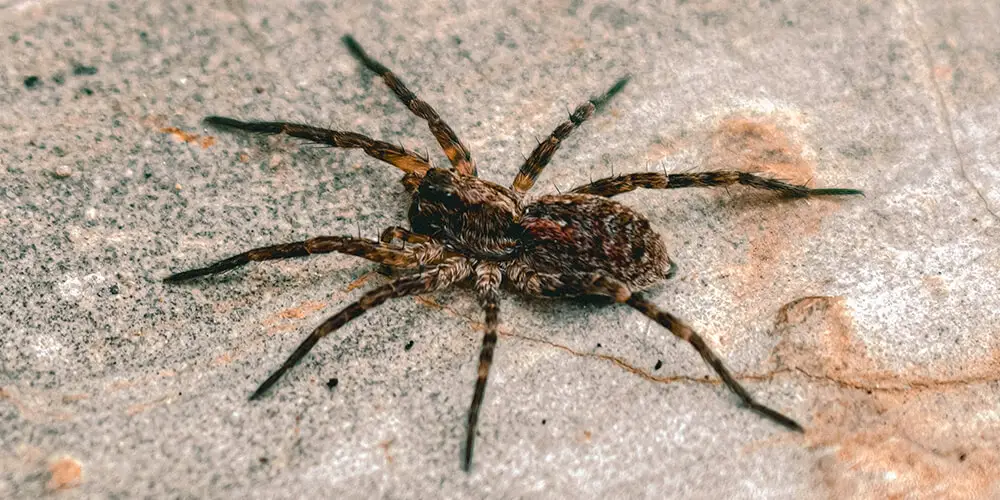
Wolf spider
The wolf spider is a big, fast-moving brown or grey spider with dark markings. Common species often found in Canada are generally around 1 to 3 cm (0.4 to 1.2 inch) in length, though some can be larger.
Wolf spiders do not make webs to capture prey. Instead, they are active hunters that stalk and chase their prey on the ground or wait for it in burrows they dig in the soil.
If in the house, you’ll find them on the ground in basements and near doors or windows where they can hunt. Their venom is not particularly harmful to humans.
Is a daddy longlegs a spider in Canada?
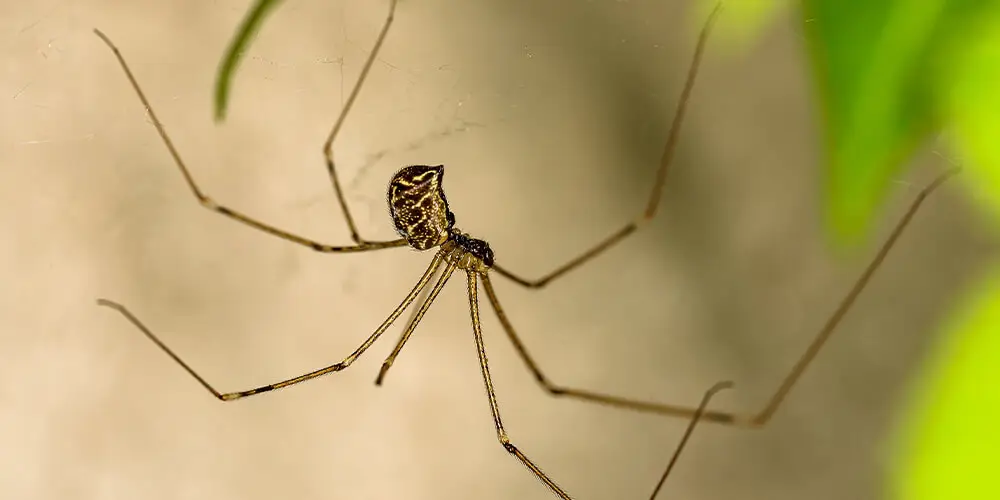
Cellar spider (often called daddy longlegs)
Cellar spiders are easily identified by their extremely long legs. Usually found in the corners of closets, basements, garages, sheds and crawl spaces. They prefer damp or cool parts of your home. Cellar spiders build loose, irregular, tangle-like webs in corners near the ceiling or floor.
Often confused with another insect known as “harvestman” that is also sometimes called daddy longlegs. The harvestman is not a true spider species, rather a species more associated with scorpions. Basically, they look similar, but a cellar spider has two body parts while the harvestman has only one. Both are totally harmless and cannot bite humans.
What do spiders use to paralyze their prey?
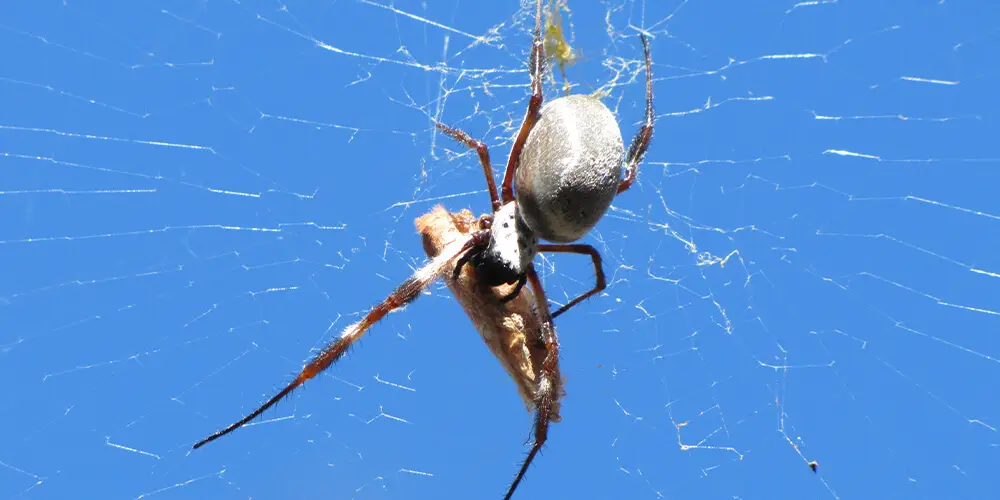
Orb-weaving spider
The orb-weaving spider spins webs on plants in sunny areas and then lays in wait for some prey. They produce venom that is harmless to humans but which helps to immobilize flies, bees and other flying insects that are caught in their sticky web.
These spiders vary in size, but typically have a large, round abdomen, usually reddish-brown or grey (but it can also be brightly coloured with yellow parts). Mature female adults can range anywhere from 1.5-3 centimetres in total length. Males are often half the size.
Are spiders able to jump?
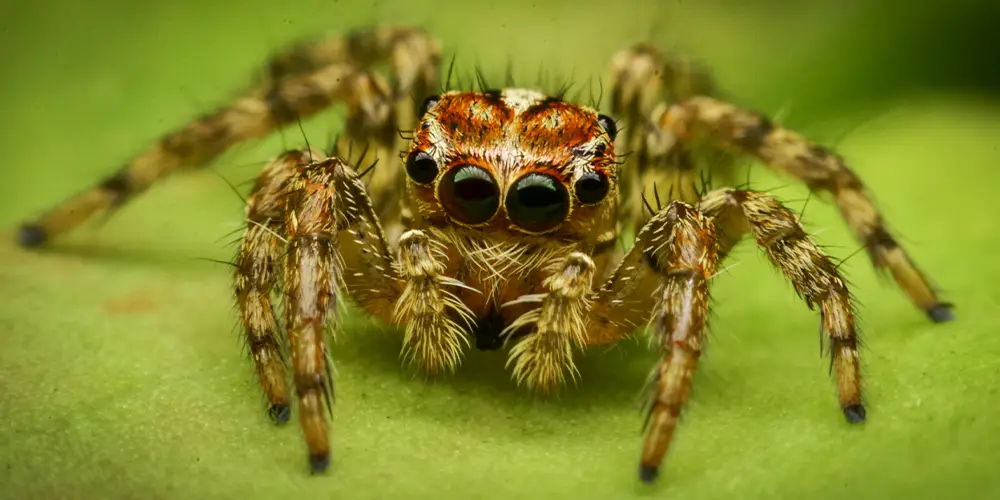
Jumping spiders
Jumping spiders are a common and recognizable group of spiders in Canada, known for their excellent eyesight, jumping ability and small, often hairy, compact bodies.
Like cats, they are skilled predators that can locate their prey from a distance, approach the unsuspecting victim and attack, jumping as much as 25 times their own height. Jumping spiders consume flying insects. They are typically 4 to 20 mm in length and live in fields, yards, gardens and woodlands.
Sometimes, they accidentally get a ride indoors on clothing and plants. Once inside a house, jumping spiders hide behind baseboards, beneath furniture and in wood flooring gaps.
How can I tell what kind of spider web I have?
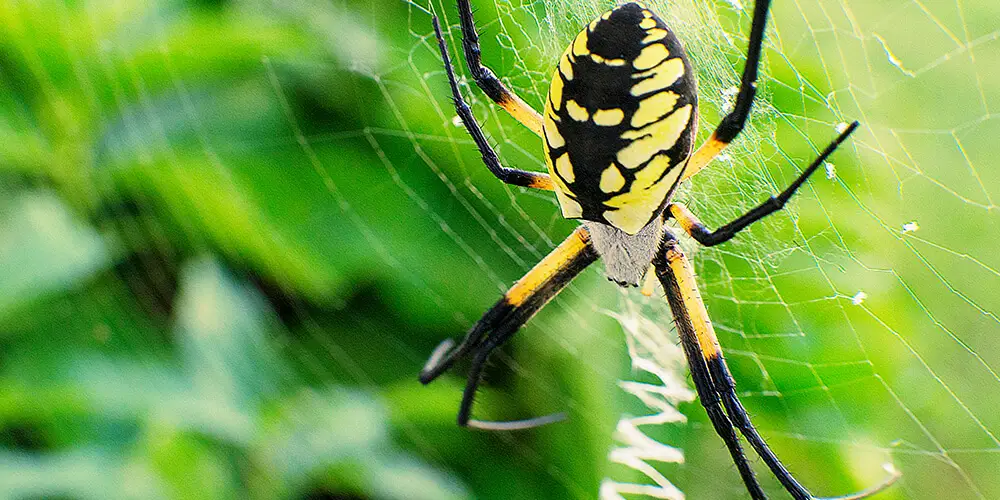
Yellow garden spider
These spiders have distinct black and yellow markings with large legs that have red or yellow markings near the body. Females are 19-28 mm, while males are much smaller at 5-9 mm.
The web of this garden spider is a highly visible circular shape up to 60 cm in diameter with a dense, zigzagging, X-shaped pattern at the centre. Yellow garden spiders usually build their webs in open areas as opposed to dense shrubs or inside shelters.
Despite its size and bright colours, this spider is not a danger to humans. It is very unlikely to bite unless severely provoked, and in that case the bite would be no worse than a bee sting.
What is Canada's biggest spider?
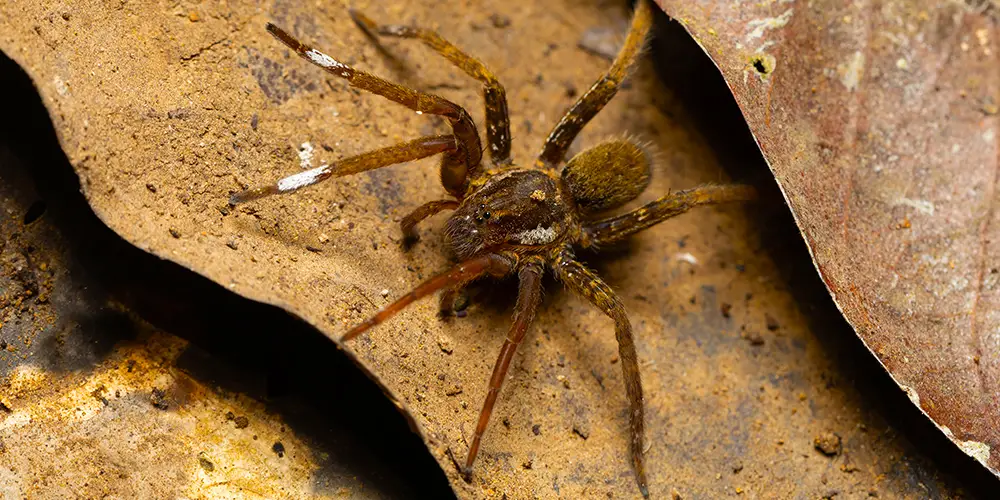
Fishing spider
Fishing spiders are large and robust with grey or brown colouring and lighter stripes along their bodies. They look like wolf spiders but are much larger. The fishing spider is among Canada’s largest spiders, with a leg span that can exceed 7 cm.
Usually seen on docks, boats and shoreline vegetation. This spider can walk on water because it has hair that repels water and widely spaced legs that distribute its weight evenly to avoid breaking the surface tension.
Although a water bug, you can often find them in wooded areas away from water sources, on vertical surfaces like tree trunks, walls and siding, in basements and garages. They are not aggressive towards people and will flee if frightened. Bites are rare and only occur if the spider is handled.
Can every spider make webs?
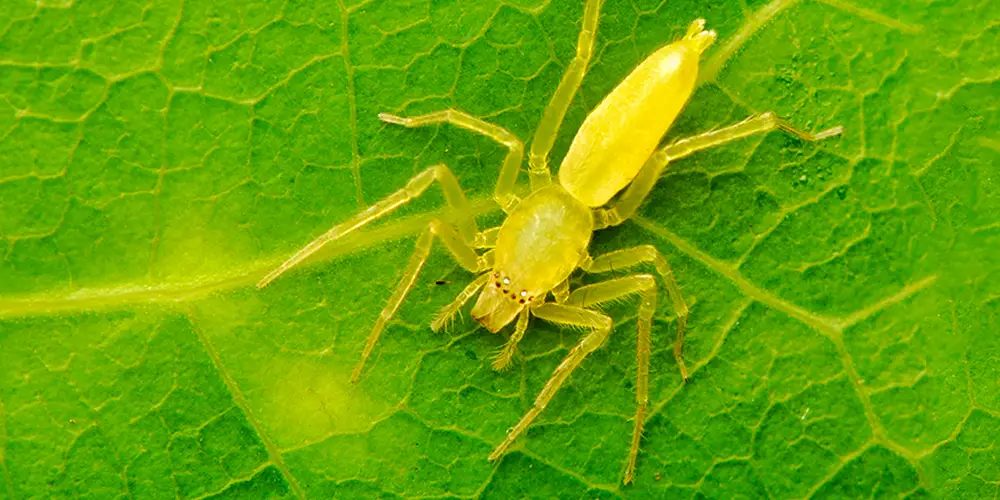
Yellow sac spider
The yellow sac spider is small (5-10 mm) with pale yellow colouring and a darker head. Yellow sac spiders do not build webs. Instead, they create silken tubes or sacs from which they hide during the day and come out at night to hunt.
Yellow sac spiders enter houses as the weather grows colder in the early fall and can be found in the cracks, ceilings and corners of rooms. They are not aggressive to humans but can leave a nasty bite if provoked (much like a bee sting). You want to avoid handling them.
What is the most dangerous spider in Canada?
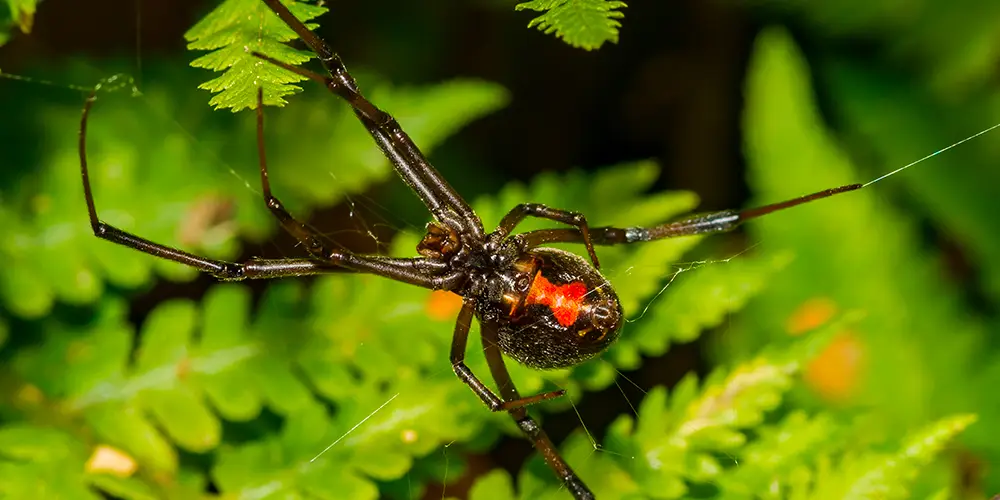
Black widow spider
The black widow spider is shiny black with a red, hourglass-shaped mark on its underside. It is not usually inclined to enter a house. Instead, it prefers dark, secluded spots in garages and sheds or when outside, under rocks and fallen trees. Their web is small and close to the ground.
It is not common in most of Canada but can be found in southern regions along the US-Canada border. Its body is 1 to 1.5 cm long, and when including its legs, up to 3.8 cm (1.5 inches). The male is about half the size of the female, often brown with reddish or whitish stripes on the abdomen.
This is the one spider that can harm humans with its venom if or when they decide to bite. A black widow spider bite injects a neurotoxin that can cause severe symptoms like intense muscle pain, cramping, nausea, vomiting and sweating, along with a localized reaction at the bite site. Seek medical attention.
What is the most aggressive house spider?
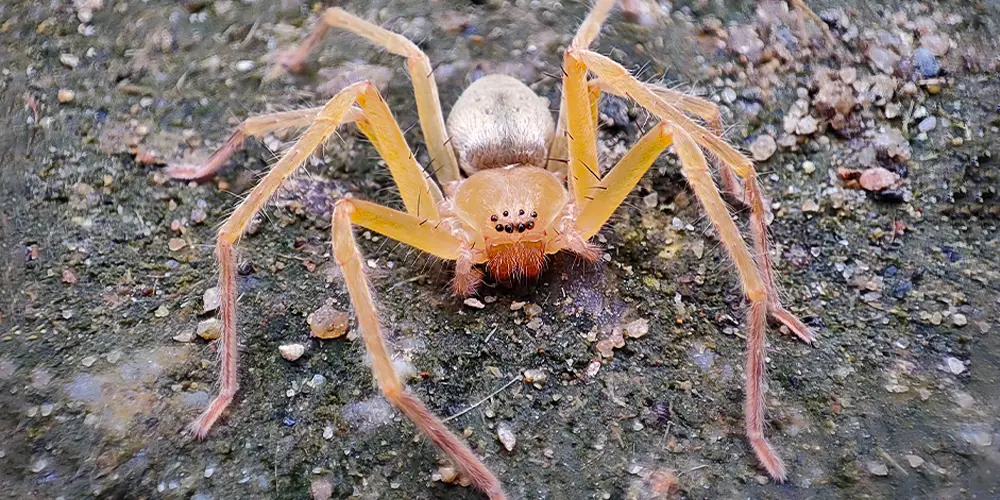
Non-native brown recluse spider
While the black widow spider is the one spider out of two that can be very harmful to us, there is one last spider whose bite and venom are harmful.
The brown recluse spider is not native to Canada. It is known for occasionally hitching a ride into our country via goods brought in from the south. They can’t survive our winters.
An adult brown recluse spider is typically 0.6 to 1.25 cm (1/4 to ½ inch) long. As the name suggests, these spiders are brown to tan in colour. Likewise, their legs are smooth and the same colour as their body.
Encounters are rare and often involve misidentified spiders, but if a brown recluse is suspected, you should seek medical attention.
