
TABLE OF CONTENTS
- How do you find a rat burrow?
- How to avoid attracting rats to your yard
- Is it bad if you have rats in your backyard?
- How do rats get into homes?
- Should I block up a rat hole?
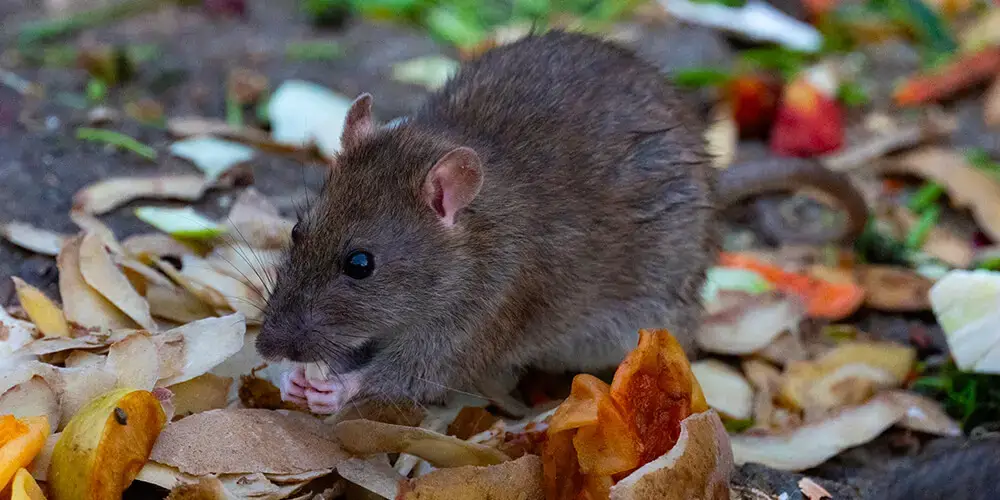
Rats are a major problem, and unfortunately, a problem that's growing every day. In cities, they're being seen in neighbourhoods where they were previously absent. While they once tended to hide from humans, they now show no hesitation in invading yards and patios in broad daylight.
This is becoming a real scourge, not only in cities, but also in suburban and rural areas. To prevent their presence in your garden, and very possibly in your home, you must ensure that they are unable to find what they need: food, water, shelter and the means to move around safely.
Learn more about the rodent proliferation phenomenon in our article.
How do you find a rat burrow?
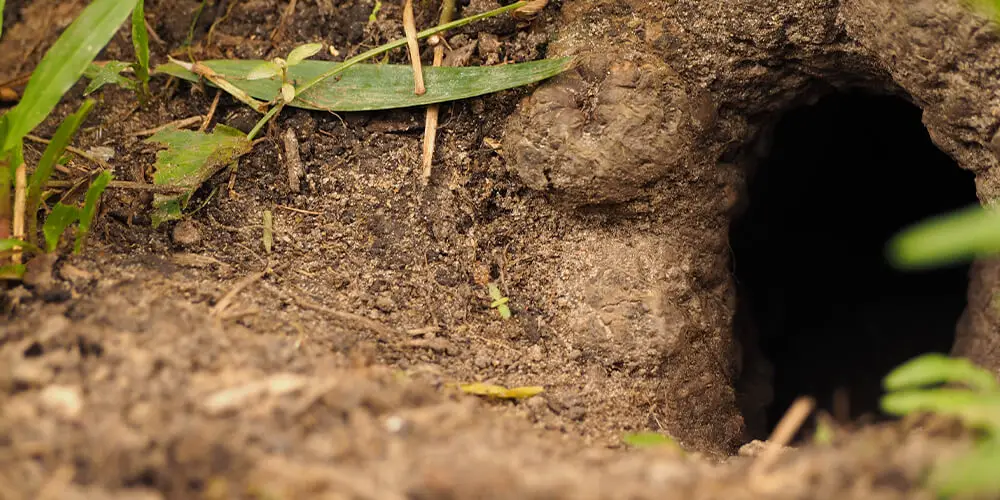
Rats live in nests or burrows. They may live in groups. These burrows protect them from predators, allow them to store their food, keep cool in the summer and, of course, raise their offspring.
Your garden soil, where the earth has been worked and is looser, is favourable to the establishment of an underground network. This can become a complex network of tunnels, found less than 50 cm deep.
To discover them, you just need to know what to look for.
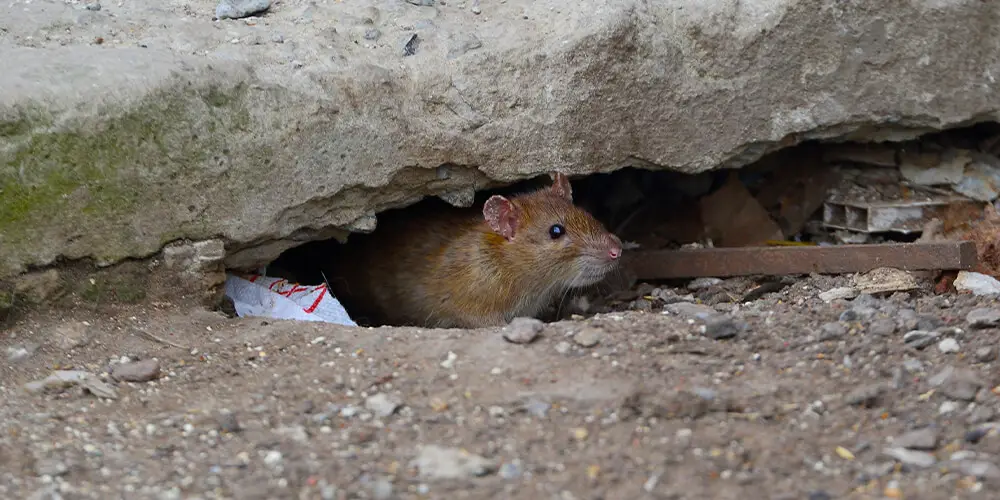
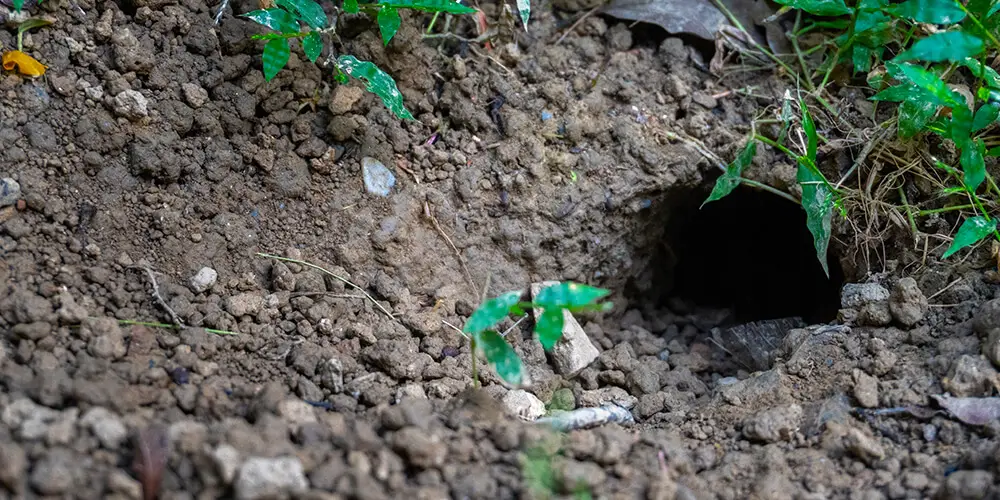
All you see of burrows are holes in the earth or asphalt. They often run along sidewalks, driveways and walls, near compost heaps or woodpiles. They can also be hidden in bushes or dense flower beds. These holes have smooth edges (which differentiate them from other animal burrows) and a diameter of 5 to 10 cm.
Burrows may have multiple exits. Rats are considered intelligent animals that can learn and think… they also have a good spatial memory, which allows them to find their way around easily.
Since rats make the same trips several times a day (they have their habits) to get to their burrows, they leave traces that allow you to find them. You can see droppings (if they're black and wet, this indicates that rats are nearby), but also dark, greasy tracks along sidewalks, walls and fences. You can also get a good clue about their paths by observing the furrows in the grass.
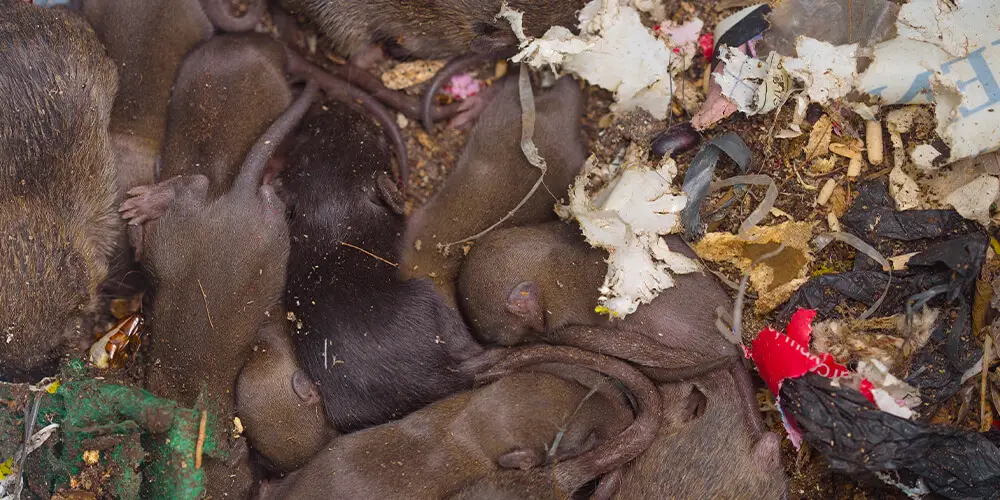
The choice of location is primarily based on three criteria: easy access to food and water, access to a heat source, and shelter from predators (cats and hedgehogs) and bad weather.
Other unusual places where rats can settle:
- Flower pots and planters
- The edges of ponds and water gardens
- Piles of dead leaves or mulch
- Under decks and wooden porches
- In garages, sheds
- A car engine
If you can't spot them, go outside with a flashlight after dark. Rats will lead you straight to their burrow... or to the passage they use to enter your home!
How to avoid attracting rats to your yard

- Never leave garbage bags or bags containing food scraps or packaging outside. Whenever possible, put your garbage out the morning of collection, not the day before. Between collections, place your garbage in sturdy metal or plastic trash cans with tight-fitting lids.
- Clean up droppings and dark, oily stains left by rats on materials. Rats communicate and attract other rats through their urine and their droppings. Wash the areas they frequent with a solution of water and bleach (one part bleach to 10 parts water).
- Be careful not to provide rats with hiding places or materials to build a nest (where they'll breed). Recycle piles of newspapers, paper bags, packaging and cardboard boxes. Declutter and organize the basement, garage, shed and garden. Store items up high.
- Uproot vegetation around burrows to clear about six inches of soil along building walls. Trim the base of shrubs and avoid dense plantings.
- Do you feed stray cats, squirrels or pigeons in the neighbourhood? Then you're most likely also feeding rats. These pest rodents eat anything they can find and are satisfied with very little. An ounce of food a day can be enough for them!
- Beware of composters that offer rodents an all-you-can-eat buffet! Choose a closed model with a lid and small ventilation holes, and place a metal mesh at the bottom of the composter. Stir regularly to keep rodents from feeling safe. The following foods should be avoided as they attract rodents: meat, fish and dairy products.
- Invite your neighbours to do the same... now, not later! This should prevent rats from moving from one house to another and staying in close proximity. They will constantly have to start over.

Is it bad if you have rats in your backyard?
The presence of rat burrows and holes in the garden poses very real risks. What you are seeing is the visible part of a network of underground tunnels that can not only damage vegetation and lead to the destruction of the vegetable garden, but also cause soil instability.
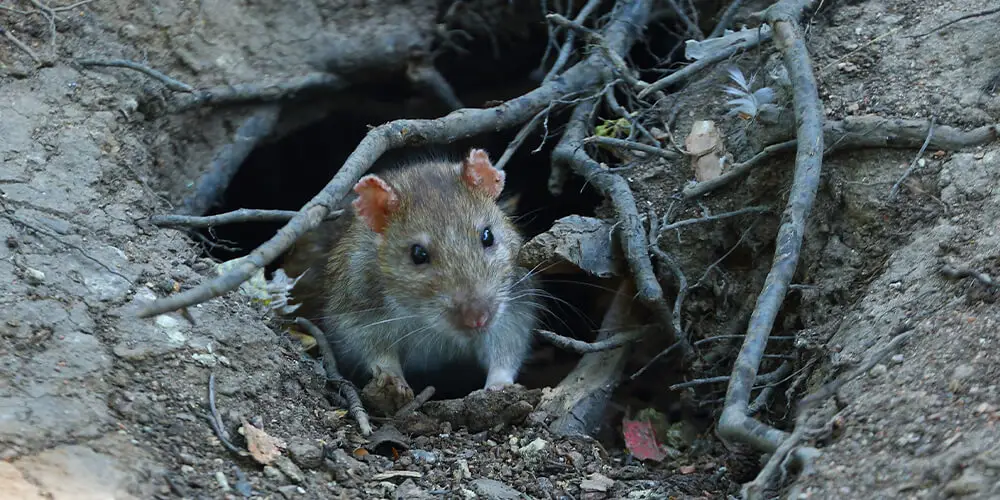
Risks to plants
Devoured roots, devastated flower beds, contaminated vegetables.
The harmful effects of nests and burrows on the topography of the garden
Besides the fact that it is neither pleasant nor safe to walk on a network of tunnels containing rats, this condition can accelerate the erosion process, particularly on slopes and near waterways.
A danger to structures and buildings
The soil instability caused by the presence of tunnels can pose a risk to the structural integrity of buildings, patios, driveways and low walls, and potentially result in costly reinforcement or repair.
A threat to health
Rats carry numerous diseases, some of which can be fatal. Their presence in the garden, as well as their droppings, can contaminate the soil, water and edible plants you grow. Rats can also transmit diseases or parasites to pets.
The presence of rats obviously makes it hard to enjoy the yard. And finally, when the chilly weather sets in, rats will leave their burrows and go in search of a warm place to settle in for the winter.
Also learn how to safely eliminate rats and mice.
How do rats get into homes?
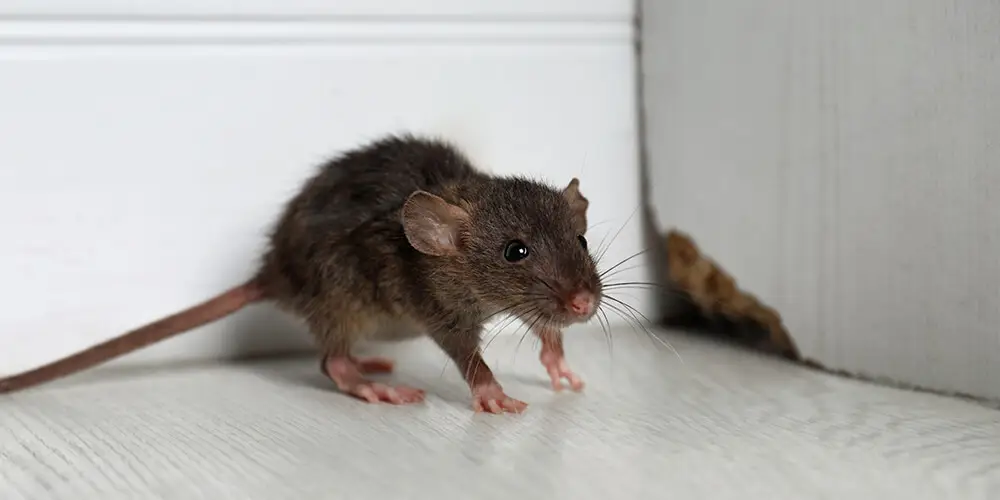
Like many rodents, rats have teeth that grow continuously throughout their lives. To keep their teeth at an appropriate length, rats must gnaw on hard surfaces.
Rats can cause considerable damage by gnawing on various materials, including concrete, metal, wood, plastic and electrical wiring. Their presence can be identified by discovering teeth marks on pipes, siding, garbage cans, cement, etc.
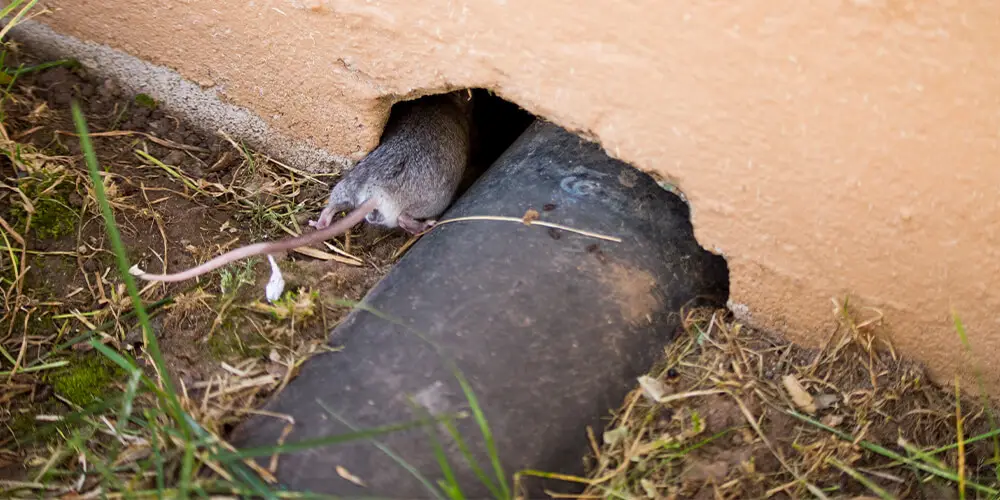
With their powerful teeth, rats can enlarge existing cracks or holes, creating entry points for themselves and other rats.
Block any access points that could allow them to enter your home. A half inch (1.27 cm) crack is a potential entry point for a rat capable of gnawing through metal and concrete. Materials for filling and sealing are available at hardware stores and most are inexpensive.
Find out more in our article.
Should I block up a rat hole?
Have you managed to keep rats out of your yard? Remember that rats are opportunistic rodents that don't hesitate to settle in an empty burrow.
You can recognize an empty burrow by the presence of leaves, cobwebs or other debris accumulated in and around the hole. These burrows must be sealed quickly to prevent other rats from settling there.
To seal off an underground burrow, fill it with soil, which you can mix with gravel and clay. Pack the soil mixture with a shovel or your foot. You can also install a piece of wire mesh at the entrance, carefully pushing it in before sealing the opening.
For a burrow in a sidewalk crack, use metal putty and cement. If after a few days your barricade appears to have been forced open or has weakened, you know the rats are back or haven't been completely eradicated.
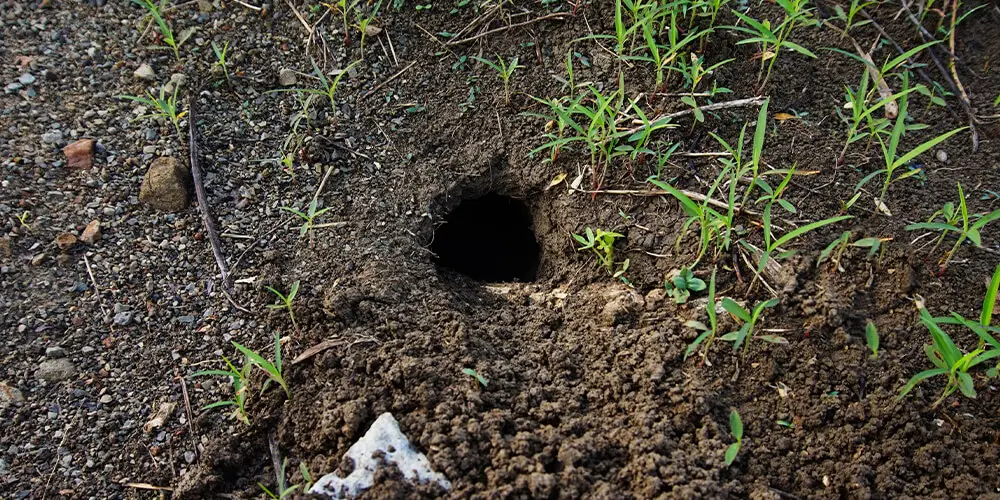
Tip to tell if a burrow is occupied or not
Insert a small piece of paper or cloth at the entrance to the burrow. If it's still there after a day or two, the burrow is most likely unoccupied.
