
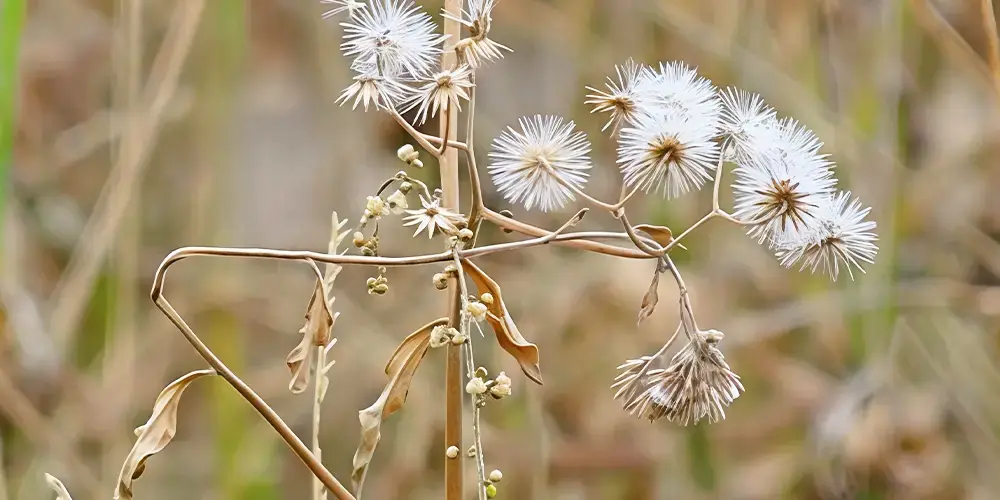
For many people, the arrival of fall marks the end of the gardening season. We put away our tools, abandon our garden beds and, until winter sets in, let nature take its course. Yet this is the best time of year to tackle weeds, whether they’re in the lawn, in garden beds or elsewhere in the garden. Here’s why it’s worth rolling up your sleeves one last time.
5 reasons to tackle weeds in the fall
1. Perennial weeds absorb more nutrients… and herbicides!
In the fall, as the weather cools down, perennial plants—whether ornamental plants or weeds—go into “storage mode.” They begin storing as many nutrients as possible in their underground parts, as these reserves will fuel their big return the following spring.
It’s an effective natural mechanism… and a formidable one when you think of dandelions, bindweed, Japanese knotweed and other perennial weeds. The good news is that you can also take advantage of it by using WEED OUT or WIPE OUT at this time of year. The herbicide is quickly transported through the plant tissues to the roots, helping eliminate the weeds at their source. This explains why you can get better results than when treating them in the spring or summer.
2. Preventing weeds from reseeding
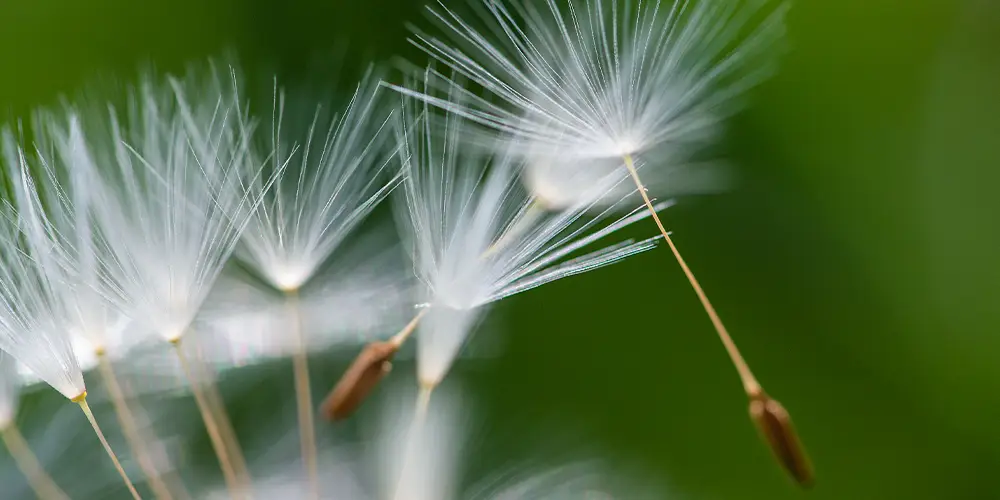
Many weeds produce their seeds in late summer or early fall. To win the battle against weeds, it’s essential to prevent them from reseeding. By getting rid of them now and making sure to bag the seed heads and flowers before they release their seeds, you can significantly reduce the weed population next year. Acting now automatically means less work in the spring!
3. New weeds haven’t had time to become firmly established yet
The new weeds that took advantage of weak areas in the lawn to become established are still at the seedling or rosette stage, and their roots are still shallow. As winter approaches, their growth slows down, but things will be very different the following spring if you haven’t eradicated them by then!
4. Weeds are easier to spot
The return of cooler weather slows plant growth. Weeds are easier to spot, especially in the lawn, and some become even more noticeable as they take on fall colours or produce eye-catching blooms. Crabgrass takes on a purplish hue, ragweed reaches an impressive size, and quackgrass, which thrives in cool weather, puts on a worrying growth spurt, producing new stems and highly visible seed heads.
Weeds are also easier to target. You can eliminate them without risking damage to the lawn or nearby ornamental plants.
5. Weeds are easier to pull out
In the fall, the soil is often wetter and looser than in the middle of summer, making it easier to pull out all the roots. This is crucial for species such as dandelions and quackgrass, which can regrow from even a tiny root fragment.
When to pull weeds by hand
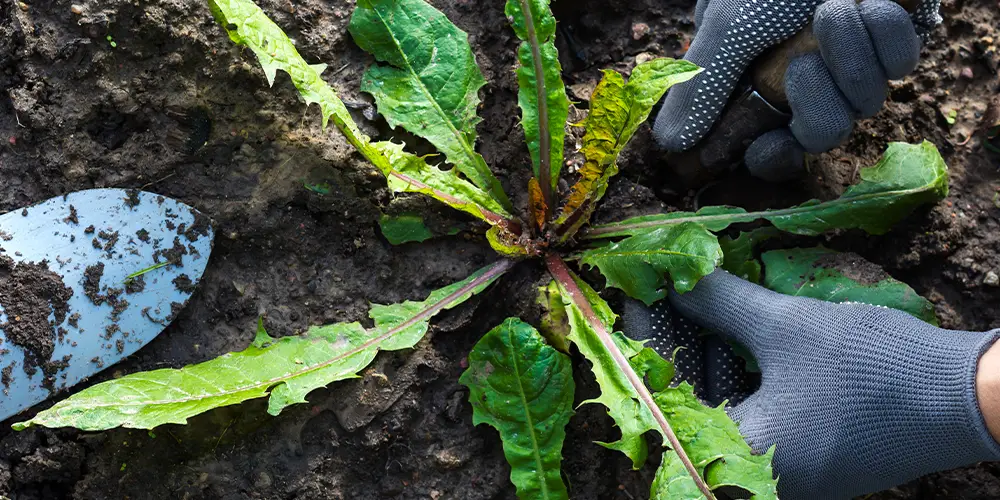
For small areas that need weeding, as well as for sensitive areas near vegetables, flowers or shrubs, pulling weeds by hand remains a preferred method.
3 tips for effective hand-weeding in the fall:
- Use a weeding knife or hand fork to remove deep roots without breaking them.
- Weed after rain or watering to take advantage of soil that is easier to work.
- Collect the pulled weeds and throw them in the garbage rather than the compost if they have already produced seeds.
Use herbicides in the fall for enhanced effectiveness
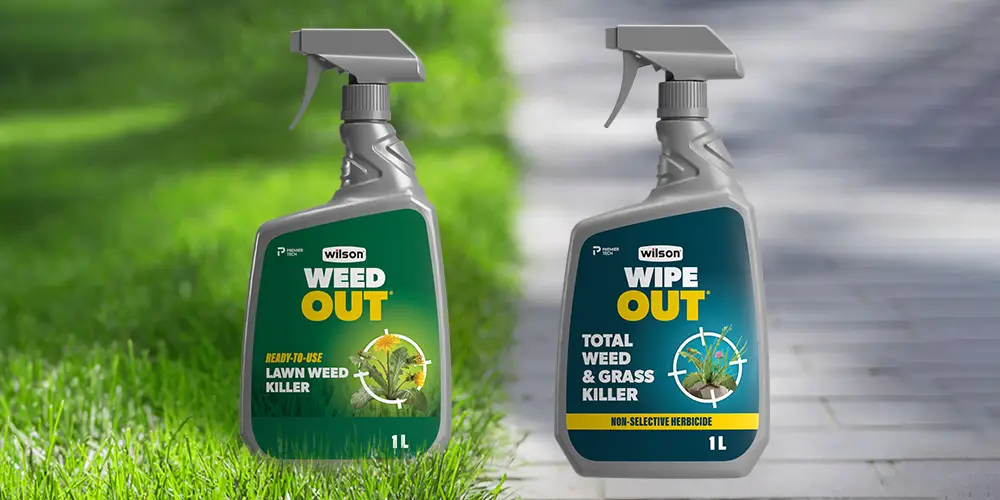
When larger areas need to be treated or when weeds are too invasive for hand-weeding, our WEED OUT and WIPE OUT herbicides offer solutions suited to every situation.
In the lawn
WEED OUT is a selective herbicide designed for lawns. It specifically targets broadleaf weeds (dandelions, clover, plantain, etc.) without damaging turfgrass. Applied in the fall when temperatures are still above 10 °C, it penetrates the leaves and works its way down to the roots.
Apply the product on a windless day, with no rain forecast for the next 24 hours, to maximize absorption.
In pathways, along borders and in non-cultivated areas
WIPE OUT is a non-selective herbicide designed to quickly and effectively eliminate all vegetation, including mosses and lichens, in areas where no plants are being grown, such as pathways, patios, driveways or along foundations.
In flower beds
Although hand-pulling is often the preferred option in flower gardens, herbicides can also be used, taking care not to spray nearby ornamental plants. Once again, apply the herbicide on a windless day to prevent accidental spray drift.
What is the best time to treat weeds in the fall?
The ideal window for treating weeds is from mid-August to mid-October. To ensure optimal results, the key is to make sure that:
- the weeds are still actively growing
- daytime temperatures remain above 10 °C
- no frost is forecast in the days following treatment
After this period, plants enter dormancy and treatment effectiveness decreases considerably.
Taking care of your garden in the fall gives you a head start on spring. By combining targeted hand-weeding with Wilson products suited to each area, you can take back control of your outdoor space and enjoy your yard as soon as the warmer weather returns.
