

You're out in the garden and notice a lot of ants weaving through your flower bed, or worse, an anthill near your favourite perennial. Should you worry? The answer depends on what's happening. Here's how to tell the difference, and what to do when it's time to act.
Are ants in garden beds harmful to plants?
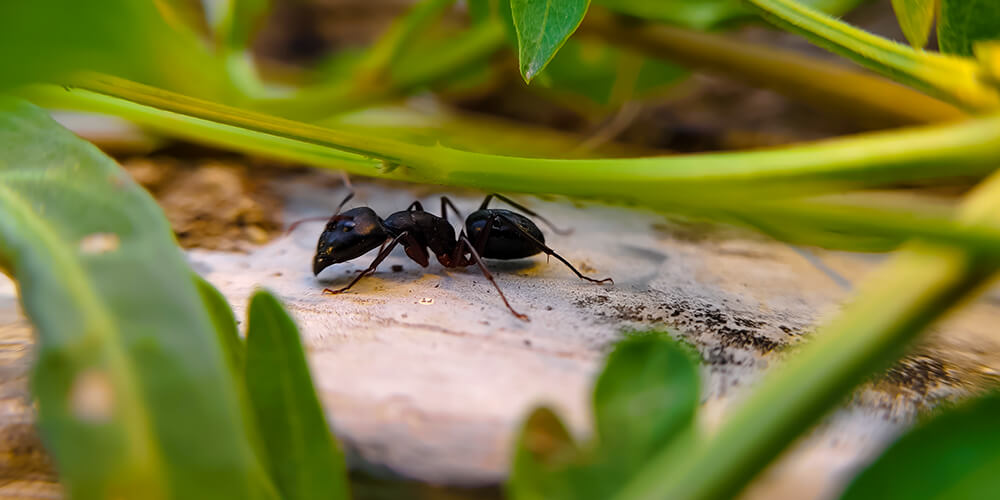
Most experienced gardeners will tell you that overall, ants aren’t a problem in the garden. In fact, they are vital partners in the ecosystem. They hunt pests, aerate the soil, pollinate plants and speed up the decomposition of dead organic material. In most of Canada, ants are active from May to September. What you see are worker ants either searching for new food for the colony or following a trail to a food source that was previously identified by a “scout” ant. They don’t normally damage the plants themselves.
When ants become a real problem in your garden
Ants could be a problem when your garden is very close to the house. The concern with beds right up against the house is that ants may look for a way to get inside. If you have entry points like cracks and gaps in your home that aren’t plugged up, you may end up with unwanted visitors. Learn how to get rid of ants indoors before they settle in.
While ants do not affect plants directly, they sometimes build a large nest directly beneath a plant, which can open up the soil and disrupt the root system, causing the plant to dry out or wilt. Anthills sometimes smother low-growing plants or ground covers. Since ants are attracted to the nectar of some blossoms, their presence could ruin the aesthetics of your flowers.
Understanding ant colonies: why they’re hard to eliminate
What all species of ants have in common is their colony structure: a queen ant, her eggs, larvae and pupae, many female worker ants and, to a lesser extent, winged male drones. The queen stays in the nest, laying thousands of eggs, the younger female worker ants feed the larvae and maintain the nest, while the older female worker ants forage out of the nest for food. The non-working winged male drones are around just for breeding and then perish.
Unlike many other insects, ants do not die off in the winter months. In fact, they slow down and the colony huddles together deep in the soil, only to re-emerge the following spring. That is, of course, unless they manage to overwinter in your warm house! There, they remain active.
With the exception of carpenter ants, which can cause serious damage to a building, most ants are harmless. However, when present in large numbers in the kitchen or pantry, ants become a nuisance.
Why are ants in your garden beds?
Ants feed on a mix of proteins and carbs, like dead and living small insects, insect eggs, nectar from blossoms, decaying fruits and seeds, all of which are available in your garden. Loose, well-drained soil in garden beds is considered prime nesting real estate for ants, while raised beds and south-facing beds warm up faster in spring, making them more attractive.
Compost that has been spread in the garden and that isn’t fully decomposed will draw them like a magnet. Consider that the aroma of not quite fully rotted fruits or vegetables is tremendously alluring to them.
Mulch can also encourage ants to move into your gardens. Perfect to keep weeds down and moisture in, it does happen to create a cozy habitat for ants. It doesn’t mean you should not use it in your gardens. Later in this article, we will explain how to get rid of ants in gardens if they become a problem.
Ants and aphids: a hidden threat to your plants
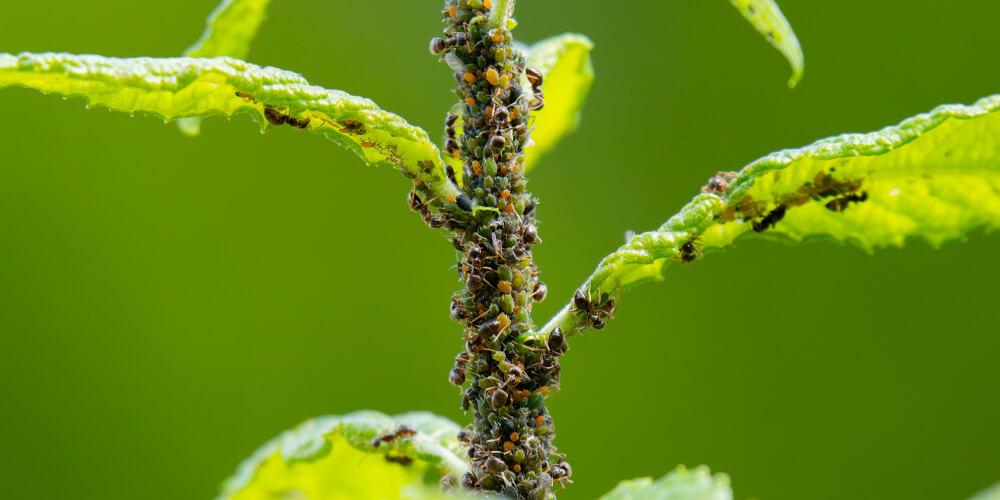
Ants love “honeydew”, a sweet sticky fluid excreted by aphids, scales, mealybugs and some caterpillars. In fact, ants love honeydew so much, they actually defend those honeydew-producing insects from other predators in exchange for the sweet sugar-rich food source.
Amazingly, if the host plant begins to suffer, ants will even physically pick up and carry these sap-sucking insects to another healthy plant to ensure a continuous food supply. Some ants will even collect and store the insects' eggs inside their underground nests during the winter to keep the eggs safe from freezing, placing them back on plants in the spring.
If you see ants swarming specific stems or leaves, you are likely to have an aphid, mealybug or scale infestation that needs to be addressed. Some gardeners think that it’s the ants that are causing the plant’s decline. In fact, it’s the aphids, mealybugs and scales that are sucking the sap out of the plant. Get rid of the honeydew producers and the ants will move on. To control aphids, mealybugs and scales, spray the plant with Wilson or Green Earth Insecticidal Soap.
7 tips to prevent ants from nesting in your garden beds
- Remove debris: old wood, leaf piles, stones near beds.
- Avoid over-mulching (keep to 5–7 cm).
- Control aphids first — remove the food source.
- Water regularly — ants prefer dry soil for nesting.
- Keep the ground fairly clean of fallen leaves and flowers to make the garden less appealing.
- Plant herbs that tend to repel ants, like mint, lavender and rosemary.
- Act early in the season before colonies can get established.
How to get rid of ants in garden beds
Plenty of old gardening tricks help to control ants outdoors without chemical pesticides. Follow the ant trails to the nest, which could be a tiny anthill or a large mound. The key to eradication is to kill the queen and eggs.
Some say that pouring boiling water on the nest will do the trick. You must hope that the boiling water reaches all the way down to the nest, or that there is no collateral damage killing the adjacent plants. Others claim that putting one of many home remedies on the nest area: used coffee grounds, cayenne pepper, chalk, dish soap, cinnamon, baking soda or vinegar will kill, control or repel ants. The results are usually unsatisfactory and/or need frequent reapplication.
Proven solutions to eliminate ants from your garden beds
Ant infestations aren’t completely controlled with simple ant killer sprays, as you may be only removing the ones you see. To get rid of all the ants that are hidden in the nest, you need to have a little patience and use the right products.
How ant traps work
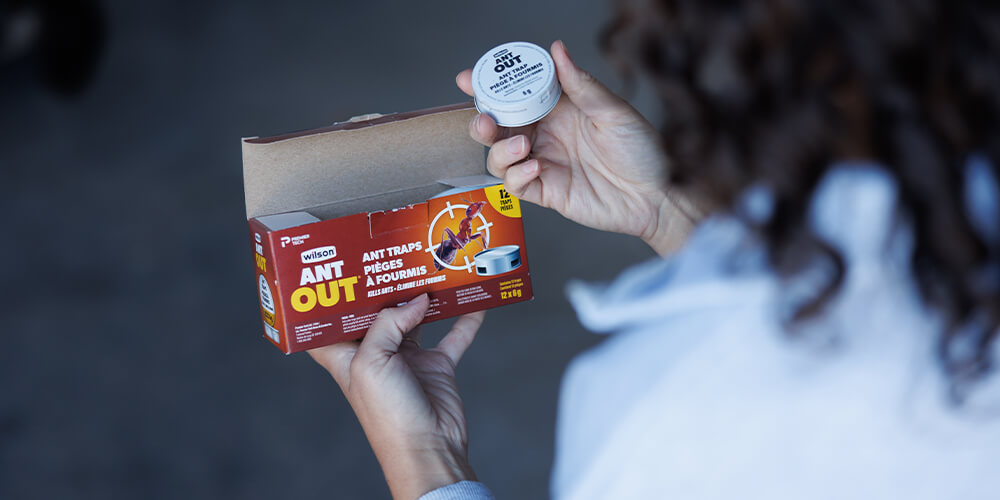
Ant traps will get rid of all the ants. They contain an attractive food source that has a slow-acting killing mineral called borax. Place the traps where you see ant activity. Wilson Ant Stakes contain both borax and an attractant. The worker ants take the “food” down into the nest and share it with the other ants. After a few days, the entire colony is eradicated.
Bait stations can help you get rid of pavement ants too.
How diatomaceous earth works
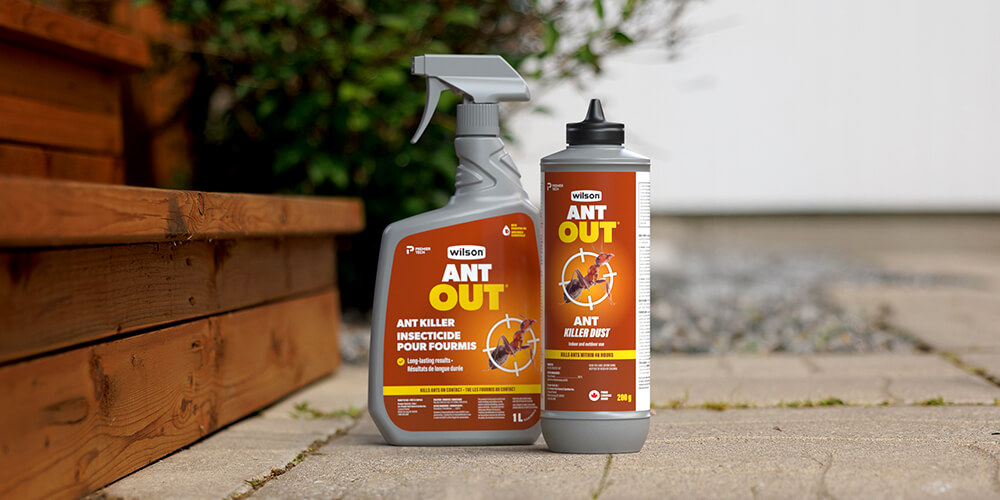
A natural alternative pesticide method is to apply Wilson ANT OUT Dust. This product is made from fossilized remains of tiny, aquatic organisms and it causes insects to dry out and die. It also contains an attractant. The sharp edges of diatomaceous earth are abrasive, speeding up the process. It remains effective as long as it is kept dry. The ants carry the dust down into the nest. Apply around nest openings and trailing paths.
How pesticide spray works
Spot treat visible activity! ANT OUT Ant Killer Spray kills on contact within 15–60 minutes. Out of direct sunlight, it also provides residual protection for up to two weeks. Spray areas outdoors where ants are concentrated, along their trails, on sidewalks, patios, decks, bed borders and edging, and around planters.
So, should you get rid of ants in your garden?
Ants can be either pests or helpers in the garden, depending on your situation. Recognizing the difference is the point where you let them be or you have to act on controlling them. You can exploit their benefits while minimizing their possible negative effects. With careful strategies, you can balance your garden ecosystem and enjoy a thriving and productive garden all season.
Ready to take action? Find the right Wilson ANT OUT product for your situation.
