
While rummaging for something in the corner of your garden shed, you spot it: a splash of red on the underbelly of a black spider. Could this be a black widow spider?
Black widows instantly conjure images of excruciating suffering, and even death. But truth be known, these beliefs may be a bit over the top. Although black widow spiders can be harmful, they’re not hiding in the dark, waiting to attack you. In fact, they are more likely to run and hide.
How common are black widows in Canada?
In Canada, there are two very similar types of black widow spiders: the western black widow found in the southern parts of B.C., Alberta and Saskatchewan, and the northern black widow found in southern Ontario and southwestern Quebec.
The black widow spider is rare in Canada. In fact, these spiders prefer warmer climates, but as temperatures continue to rise, the arachnids are slowly moving a little further north into Canada every year.
How to identify a black widow spider
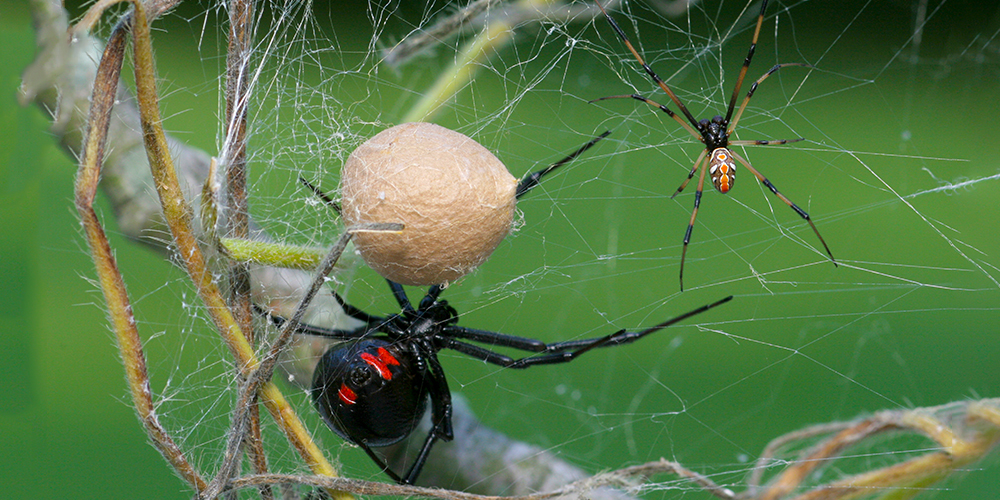
While the western and northern species are similar, male and female black widows don't look the same. The female can be about 3.8 cm (1.5”) long including the legs, and the male is usually half her size. Males are mostly tan brown, with lighter striping on the abdomen, and are harmless to humans.
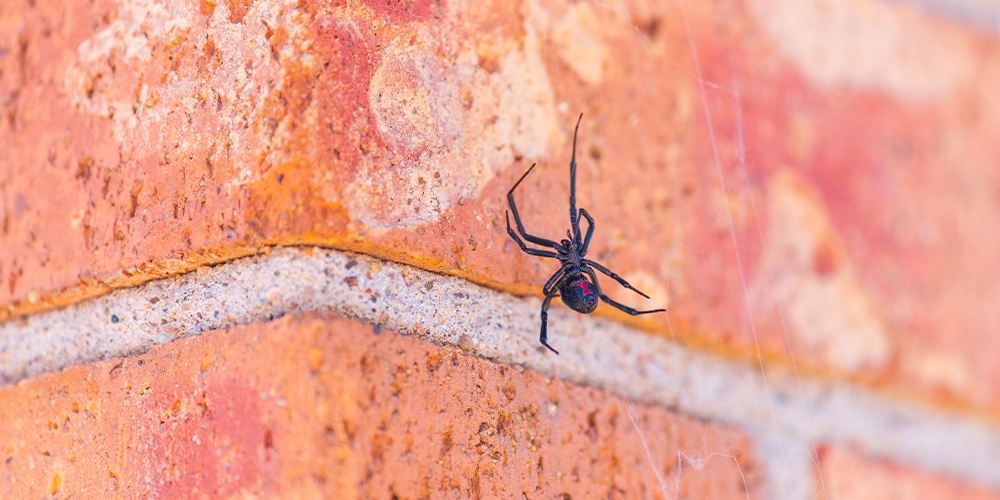
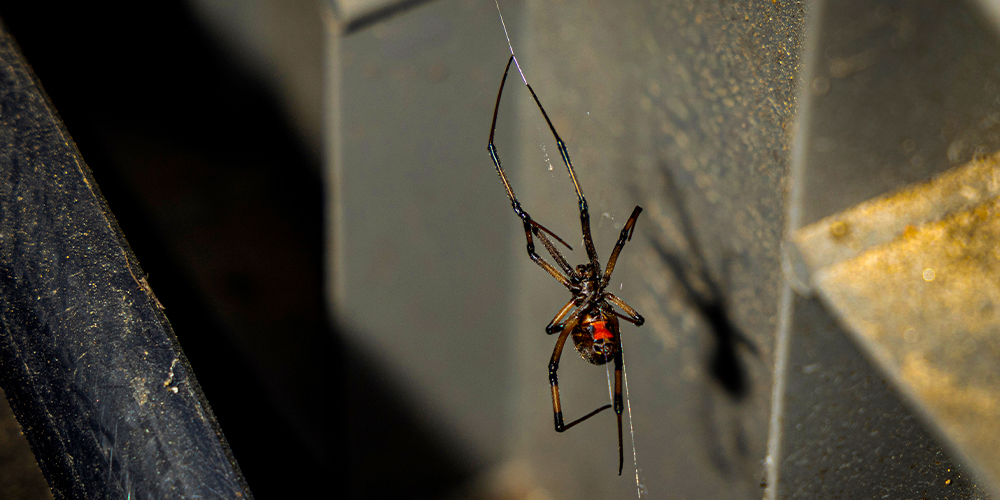
The western black widow female tends to be shiny black, with a red hourglass on the underside. Sometimes the hourglass is yellow in colour. The distinctive red hourglass marking on the underside of the northern black widow female is incomplete or split in the middle, and may also have a series of red dots on top as well as white stripes on the sides. Learn how to identify the different spiders found in our homes.
Did you know? The name “black widow” is attributed to the female because she often eats her male after mating.
Do black widow webs look different?
Unlike the classic, circular, flat wheel-shaped webs found in gardens, black widow webs appear random, disorganized, three-dimensional, and irregular. Their cobwebs are built in dark, undisturbed, low-to-the-ground spots. They are constructed using incredibly strong silk and feature highly sticky "gumfoot" threads at the bottom to instantly entangle passing insects.
Where is the most common place to find a black widow?
Outdoors, black widow spiders prefer quiet, secluded locations like the corners of sheds, in woodpiles, under large rocks and ledges, in dense shrubs, in hollow stumps, abandoned animal burrows, and beneath decks and patio furniture.
During the warmer months, they’d rather be outdoors, as that’s where most of their food can be sourced.
If black widow spiders find their way indoors, it’s usually from being brought in inadvertently with firewood or fresh produce. Come late fall, these spiders may look for a warm place to overwinter and move indoors through unsealed cracks and crevices in your building. Once inside, they can be found in garages, crawl spaces, quiet corners in the basement, attics, under furniture and appliances, and hidden amongst undisturbed storage boxes and clutter.
Understanding the spider life cycle and feeding habits can make it easier for us to discover their hiding places.
Can a black widow spider kill you?
Black widow spiders would rather retract and hide than attack humans or pets. They’re more interested in being left alone. Although the black widow female spider has a nasty venom, she is quite timid and won’t bite unless pinned or severely provoked.
Can you survive being bitten by a black widow spider?
It should be noted that there have not been any human deaths recorded in Canada from black widow spider bites. Drop for drop, the black widow’s venom is fifteen times more toxic than a rattlesnake’s, but the dose that a spider can deliver is extremely tiny. It is only meant to incapacitate its small insect victim.
When a human gets bitten, instead of just having a localized bite area, its venom can trigger the release of neurotransmitters in your system that results in stomach cramps, tremors, profuse sweating and elevated blood pressure. However, it is not usually fatal. Most healthy adults make a full recovery within 24-48 hours.
What do I do if I get bitten by a black widow?
Children and seniors are the most vulnerable. If you or someone else has been bitten by a black widow spider, you must seek immediate medical attention at an emergency room.
A black widow bite can be recognized by the two puncture marks it leaves on the skin. At first, it feels like a pinprick. You may experience discomfort at the bite location immediately after being bitten, followed by swelling or redness. Breathing difficulties, nausea and muscle aches are examples of subsequent reactions.
Immediately wash the area thoroughly with soap and water. Apply an ice pack to the bite to help reduce pain and swelling. Keep the bite area still and elevated to slow the spread of venom. If possible, have someone capture the spider, place it in a jar with a lid and bring it with you so medical professionals can confirm the species.
What happens if my pet gets bitten?
Black widow bites are dangerous for pets. If you see your pet has trouble walking, or paralysis, drooling, vomiting or difficulty breathing, it may have been bitten. You should immediately contact your vet or your local emergency animal hospital as your pet might require anti-venom and supportive medical care.
Why do I have black widows around my house?
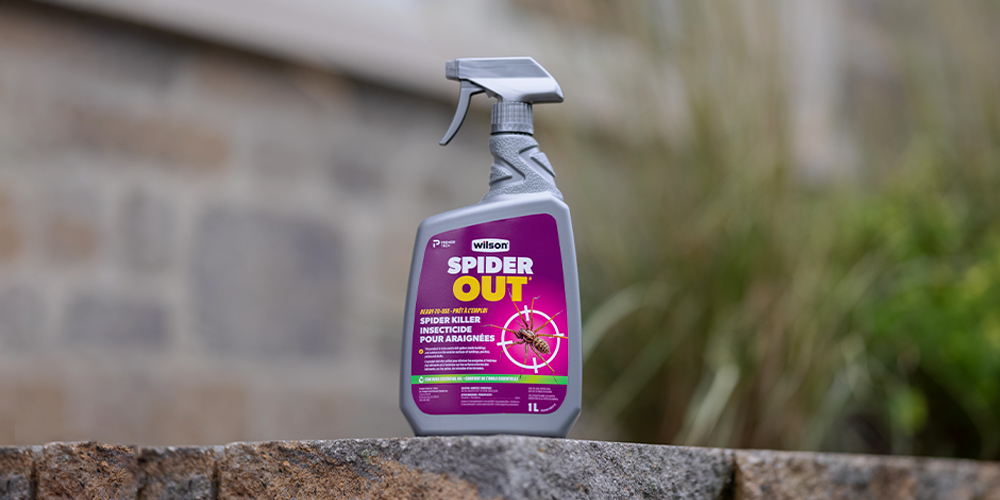
If you see a black widow spider in its web, either indoors or outdoors, you’ll want to get rid of it right away and eliminate any chance of getting bitten. You’ll need to use an effective insecticide, such as Wilson SPIDER OUT ready-to-use spray or SPIDER OUT aerosol. Either product will quickly kill the spider. It’s safe for people and pets when used as directed.
It isn’t recommended to try to capture the spider and relocate it. Not only are you risking getting bitten, but you’re also moving the problem to another spot that may impact others.
How to prevent black widows around your home?
Indoor prevention tips
To prevent spiders from living indoors, spray SPIDER OUT along baseboards, around water pipes and tanks, on walls behind and floors beneath appliances and furniture, around sinks, drains and pipes, around garbage cans, on localized areas of floors, and around points of entry like windows and doors.
Here are a few more steps to spider-proof your home:
- Seal cracks in foundations and gaps around doors/windows. Don’t forget to check for gaps where there are utility pipes, cables and vents going into the house.
- Eliminate clutter in the basement, attic or closet storage areas.
- Keep shrubs trimmed around the home’s exterior to prevent overgrowth and minimize nesting and hiding places for spiders.
Outdoor prevention tips
Black widow spiders prefer dark, quiet and cluttered spots to build their webs. Eliminate outdoor hiding spots and regularly inspect and treat living areas with SPIDER OUT. Extend your inspection to these outdoor areas:
- Inspect and treat under decks, wooden porches, eaves, awnings, canopies, patio furniture and children’s playsets.
- Keep piles and stacks (firewood, lumber, bricks, etc.) far away from the house.
SPIDER OUT will not only kill any insects hiding in these spots but will have a lasting effect that may last for a few weeks. SPIDER OUT also contains rosemary essential oil, so it doesn’t have a heavy chemical scent.
Keep your home free from black widows with Wilson
It is important to keep in mind that spider bites can be quite dangerous for seniors, small children and pets because of the type of venom they contain. Anyone bitten should be taken to the emergency department immediately.
The good news is that most spiders are harmless and quite shy. They try to avoid contact with humans and pets. Some bigger spiders will bite only if provoked or squeezed, but their bites are no worse than a bee sting. Despite black widow bites being quite rare, they must be taken seriously.
Remember to wear gloves when working in garages, sheds, or moving stored items. Keep your home safe by following our prevention and control tips for black widow spiders. You can find SPIDER OUT at hardware stores and big-box stores. Find a retailer near you.